
A Delhi court has affirmed that travelling abroad is an integral part of Fundamental Rights, allowing a woman accused in a money laundering case to visit Thailand for her children's summer vacation. The court balanced her right to travel against the risk of her fleeing justice, finding no evidence to suggest she would abscond.

The Supreme Court has declared the right to walk on demarcated footpaths a fundamental right, prioritising it over motorised vehicle movement, and has called for the establishment of a regulatory body to ensure its enforcement and provide restitutionary remedies for violations.

'Why can't we work towards a dignified end of the person when a cure is not possible and the end is inevitable?'

Private schools failing to provide these facilities risk de-recognition
The Supreme Court of India has criticized the Enforcement Directorate (ED) for focusing solely on its own fundamental rights while pursuing a money laundering case related to the Nagrik Apurti Nigam (NAN) scam in Chhattisgarh. The court questioned the agency's attempt to transfer the case to New Delhi, noting that the agency's petition under Article 32 of the Constitution is typically reserved for individuals seeking redressal for fundamental rights violations.

The Bombay High Court has ruled that Indian citizens do not have a fundamental right to adopt a child of American nationality, even from among relatives, unless the child is in need of care and protection or in conflict with the law.

The Supreme Court has declared the right to walk on demarcated footpaths a fundamental right, directing all states and Union Territories to ensure proper, encroachment-free pedestrian spaces. The court emphasised that footpaths are integral to human life and safety, and states must respond to advisories issued by central ministries regarding their implementation.

The Bombay High Court has ruled that the fundamental right to privacy includes the right to be forgotten. This decision came after a man sought to have his name and details removed from court records following the quashing of an FIR against him, arguing that public access to such information prejudiced his career and caused personal stigma. The court emphasised balancing public access to information with an individual's right to privacy.

The Supreme Court has directed the Centre to ensure all roads have properly demarcated, encroachment-free spaces for pedestrians, emphasising that the right to walk on a footpath is a fundamental right.

The Supreme Court of India will commence hearings on two significant constitutional matters: the interpretation of legislative privileges of MLAs concerning freedom of speech and expression, and the power of state legislatures to impose additional sales tax levies. Both issues will be heard by seven-judge Constitution benches, with one case stemming from a 2003 plea by journalist N Ravi regarding breach of privilege.

Supreme Court Justice Ujjal Bhuyan critically examined police conduct in India, raising serious concerns about alleged assaults on protesters, custodial torture, and the urgent need for comprehensive police reforms to uphold human rights and the rule of law.

The Bombay High Court has quashed a year-long externment order against a political leader, ruling that involvement in agitations and protests against the government cannot be the sole basis for such orders. Justice Madhav Jamdar stated that externment for opposing government decisions affects fundamental rights, including freedom of speech and expression.

The Centre has informed the Delhi High Court that adults, including those in non-heterosexual relationships, should be allowed to nominate partners for medical decision-making in cases of incapacity. This submission comes in response to a petition seeking recognition of same-sex partners as medical representatives, with the government stating this approach aligns with existing legal and ethical frameworks, respecting patient autonomy and ensuring continuity of care.

The Delhi high court on Tuesday said the right to protest does not extend to damaging the "seat of sovereignty," and a police officer's image cannot be "tarnished" over an alleged "overuse of power" during the July 20 march to Parliament against the NEET paper leak.

The Calcutta High Court has upheld a college's decision to deny an assistant professor appointment due to his social media posts, observing that the right to profess one's religion does not permit hurting others' faith. The court ruled that the college's decision was bona fide and in the institution's best interest, despite the candidate's claims of infringed freedom of speech and religion.

Top Meta India executives, including chief Arun Srinivas, appeared before the National Commission for Protection of Child Rights (NCPCR) for the second time in a week regarding alleged Child Sexual Exploitative and Abuse Material (CSEAM) related advertisements on its platforms. Meta has committed to reporting child safety matters directly to India's I4C cybercrime portal, a significant shift from its previous practice of reporting to a US-based centre. The government is pushing for stronger safeguards and accountability from social media platforms to ensure online child safety.
The condition was imposed by the high court while ordering his release on bail in August 2022.

The Delhi High Court has ruled that live-in relationships between consenting adults are akin to marriage, granting police protection to a couple facing threats. The court emphasised that fundamental rights to choose a partner cannot be curtailed by societal prejudices, reinforcing the legal sanctity of such relationships.

Pakistan's Supreme Court has ordered the transfer of incarcerated former Prime Minister Imran Khan to a private hospital for a medical examination concerning an eye ailment. This directive comes despite jail authorities claiming his eyesight was "almost normal," following petitions from his legal team expressing dissatisfaction with government hospital treatment.

The Allahabad High Court has ordered the father of two adult women and the Uttar Pradesh government to jointly pay Rs 25 lakh compensation. This ruling comes after the sisters were illegally confined at their parental home for converting to Islam. The court affirmed their right to choose their faith and criticised both the father and the state for infringing upon their fundamental liberties.

Legal database platform India Kanoon has approached the Delhi High Court, challenging a single-judge order that recognised an individual's 'right to be forgotten' and directed the platform to de-index and disable 'name-based search functionality' for certain judicial orders.
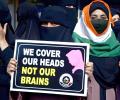
The Bombay high court on Wednesday refused to interfere in a decision taken by a Mumbai-based college to impose a ban on hijab, burka and naqab in its premises.

Taking suo motu cognisance of the incident in which three murder accused were tied to the bonnet of a police vehicle and paraded through parts of Pune, the Maharashtra State Human Rights Commission has issued notices to the state government and senior police officials.

Activist Sonam Wangchuk, who has been on an indefinite fast, was discharged from Safdarjung Hospital and transferred to Medanta Hospital in Gurugram. This move followed a Delhi High Court order, which intervened after his wife's appeal, citing his fundamental rights to choose his hospital. Wangchuk is currently admitted to ICU 8 for further treatment.

The Supreme Court has issued a limited notice to the Centre, seeking clarification on whether courts can grant fair compensation under the SHANTI Act in nuclear accidents, despite liability caps. The court also questioned potential conflicts of interest in appointing members to the Atomic Energy Regulatory Body under the Act, following a plea challenging the law's constitutionality.
The Centre has informed the Supreme Court that the 'creamy layer' principle, which excludes affluent individuals from reservation benefits, does not apply to Scheduled Castes (SCs) and Scheduled Tribes (STs). This stance opposes Public Interest Litigations (PILs) seeking to implement such a principle for SC/ST reservations and to direct the government to formulate policies for more equitable distribution of reservation benefits.

From ancient gurus to pioneering educationists and social reformers, India's history is peopled by remarkable teachers who saw learning as a force for change.

India has strongly criticised the local body elections in Pakistan-Occupied-Kashmir (PoK), labelling them as a facade to conceal Pakistan's illegal occupation and severe human rights violations in the region. External Affairs Ministry spokesperson Randhir Jaiswal reiterated India's stance that all of Jammu and Kashmir, and Ladakh, including PoK, are integral parts of India. He also dismissed Pakistan's claims to a shared cultural legacy, citing its history of promoting terrorism and fundamentalism.

"No fundamental right has been violated. Section 144 was already in place and anyone who breaks the law can be taken into preventive custody," Noted constituional expert Fali Nariman told rediff.com.

"India risks becoming one of the world's main generators of instability, atrocities and violence because of the massive scale and gravity of the violations and abuses targeting mainly religious and other minorities such as Muslims, Christians, Sikhs and others. It is not just individual or local, it is systematic and a reflection of religious nationalism," he said.

Double Olympic medallist shooter Manu Bhaker has voiced her concern over student protests against alleged exam paper leaks, advocating for every child's fundamental right to education, safety, and a fair chance at life. She emphasised that the issue transcends politics and demands greater accountability to protect the nation's future.
The Supreme Court has admitted that it had violated fundamental rights of citizens during the 1975 Emergency. The observation was made by the court which in an unprecedented move commuted to life imprisonment the death sentence, earlier upheld by it, of a man who murdered four members of a family.

The Indian Embassy in the US strongly refuted a New York Times headline referring to "Pakistani Kashmir," asserting that there is only Pakistan-occupied Kashmir (PoK) and that Jammu & Kashmir and Ladakh are integral parts of India. The embassy highlighted Pakistan's illegal occupation and exploitation of these territories, linking it to ongoing protests in PoK.

The Supreme Court has sought responses from the Union ministries of electronics and information technology and law and justice regarding a plea for safeguards for minors on social media. The NGO 'Just Rights for Children Alliance' filed the plea, arguing that social media platforms should not enter into contracts with children under 18, citing their statutory incapacity to contract and the risks of online harm.

The Bar Council of India initially directed state bar councils not to enrol 2026 NALSAR University of Law graduates due to alleged student protests against the CJI's convocation participation. However, following widespread social media criticism, the BCI reversed its decision, allowing students to enrol while an inquiry into the instigators continues.
The Allahabad high court has dismissed a petition filed by a minor student of a school in Prayagraj. The petitioner had sought permission to wear a hijab additionally along with the prescribed school dress code while attending classes.

Uttar Pradesh Deputy Chief Minister Brajesh Pathak met with students leading a "reservation reform" movement, assuring them that their demands would be presented to the BJP's central leadership and a Union minister. The movement, led by anti-reservation activists, seeks equal opportunities, while Samajwadi Party chief Akhilesh Yadav criticised the "reform" as a plot against the PDA community, asserting the permanence of reservation rights.

In 1954, a bench of eight Supreme Court judges declared that the Constitution-makers did not recognise the Fundamental Right to Privacy. It is hoped that a larger bench as and when constituted will uphold the Right to Privacy as a Fundamental Right overruling the 1954 decision, says the distinguished lawyer, P P Rao.
The apex court noted that the Representation of People Act, 1950, read with the Conduct of Elections Rules, 1961, has contemplated the name of a candidate has to be proposed while filling the nomination form.

BJP MP Raghav Chadha addressed the 12th IPU Global Conference of Young Parliamentarians in Samarkand, Uzbekistan, highlighting India's digital transformation journey. He emphasised how technology is widening access and promoting inclusion, citing UPI's success, affordable data, and robust data protection laws. Chadha also discussed India's digital cooperation with Uzbekistan and the importance of digital rights, safety, and skill development for all citizens.
